


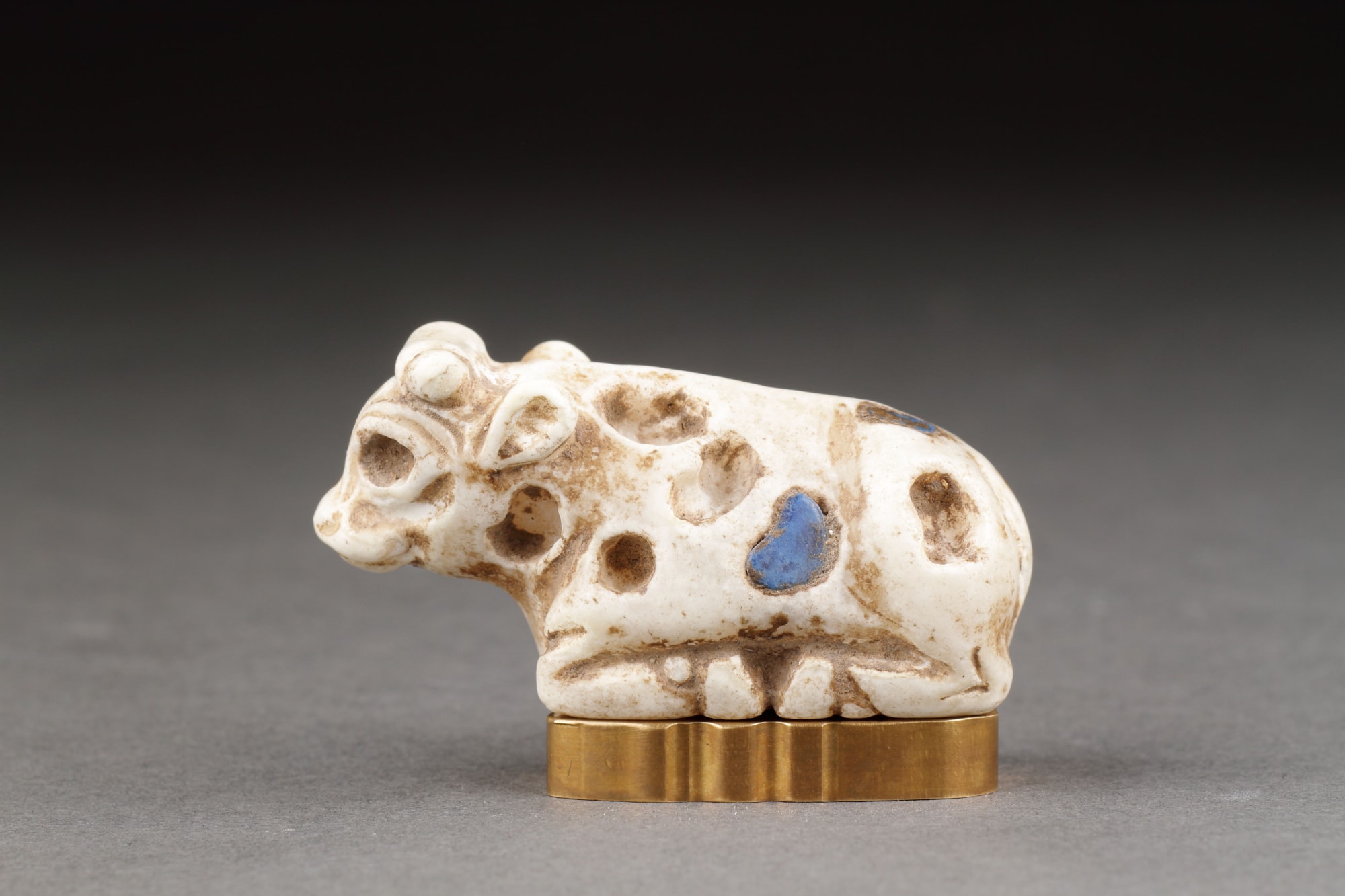
Ancient Near Eastern Sumerian Uruk White Limestone Votive Statuette of a Reclining Young Bull Inlaid with Lapis Lazuli
Ancient Near Eastern Sumerian Uruk White Limestone Votive Statuette of a Reclining Young Bull Inlaid with Lapis Lazuli
Epoque 3000 BC-2000BC
Origine Near East, Sumerian
Medium Limestone, Lapis
Dimension 3 x 2.5 x 5.5 cm (1¹/₈ x 1 x 2¹/₈ inches)
Some inlays now lost
Smooth silky patina
Circa 3000 BC
Size: 3cm high, 2.5cm wide, 5.5cm deep - 1¼ ins high, 1 ins wide, 5¼ ins deep
Epoque: 3000 BC-2000BC
Origine: Near East, Sumerian
Medium: Limestone, Lapis
Dimension: 3 x 2.5 x 5.5 cm (1¹/₈ x 1 x 2¹/₈ inches)
Provenance: Ex Private collection Elie Boustrous Beirut, Lebanon, acquired 1920s
Ex Private London collection
cf: A similar example in the Berlin Staatlich Vorderasiatishes Museum: VA14536
Literature: Often found in tombs where they accompanied their owners, the inlays of lapis lazuli were intended to replicate the spots on the bull’s hide. The holes are either circular or crescent-shaped and the inlays deeply inserted into the limestone. Cattle, especially bulls, were highly valued and given as gifts during ceremonial events and religious rites. The Royal Palaces and temples had the best herds with several temples, especially at Enna in Uruk having great shrines dedicated to the goddess Inanna, the Queen of Heaven around which the Bulls congregated. Archaeologists believe that statuettes such as this were substitutes for sacrificial animals. They were symbolic, perpetual votive offerings which celebrated the divinity, prompted answers to the worshippers prayers and ensured the continuing goodwill of the goddess.

Finch & Co
Antiquities, ethnographica, natural history, sculpture and works of art
Plus d'œuvres d'art de la Galerie


