
A Banded Agate Intaglio Engraved with the Chi-Rho Symbol
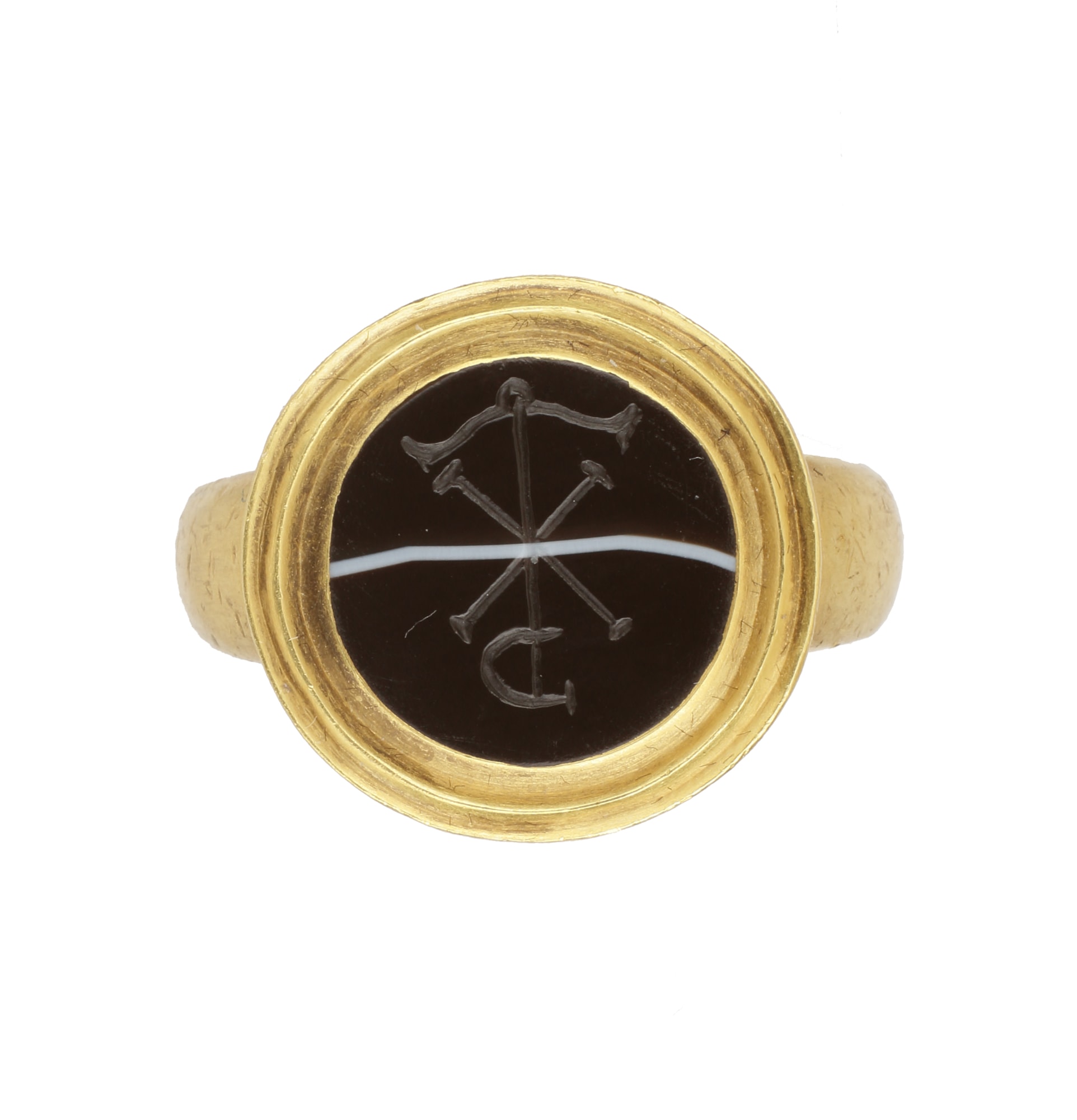
A Banded Agate Intaglio Engraved with the Chi-Rho Symbol
Period 4th - 6th century AD, Mount 20th Century
Origin Byzantine, Roman
Medium Agate, gold
Gold Ring
Gold, agate
Late Roman or Early Byzantine / 4th - 6th century AD (intaglio)
Mount 20th Century
Size: 56 (EU) O 1/2 (UK) 7 1/4 (US)
Weight: 12.5 grams
Provenance:
Ex Private French collection
Ex Private collection
Period: 4th - 6th century AD, Mount 20th Century
Origin: Byzantine, Roman
Medium: Agate, gold
Provenance: Ex Private French collection
Ex Private collection
Literature: A late Roman or early Byzantine banded-agate intaglio bearing the sacred monogram ‘Chi-Rho’ the first two letters of Χριστός (Christos) mounted in a later, 20th century gold ring of elegant simplicity. The engraving depicts the overlapping Greek letters chi (Χ) and rho (Ρ) in reverse (as was customary for sealing), set within a subtly layered agate marked by natural banding. The adoption of the ‘Chi-Rho’ symbol became closely associated with the reign of Constantine the Great, who, according to late sources, adopted it following his vision before the Battle of the Milvian Bridge in 312 AD. From that moment, the Christogram served as a potent symbol of divine protection, triumph, and Christian identity.
A comparable ring featuring a ‘Chi-Rho’ motif was discovered in the Roman Catacombs and is now housed in the collection at the British Museum (1824,0429.5). The intaglio’s use of banded agate, a stone whose layered clarity carries symbolic resonance of water and spiritual purity, reinforces the emblematic significance of the Christ-monogram and the enduring power of early Christian symbolism.

Finch & Co
Antiquities, ethnographica, natural history, sculpture and works of art
More artworks from the Gallery