

GEORGE PLACE
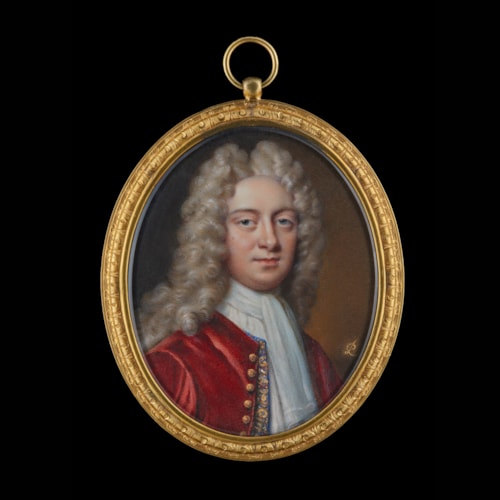
Portrait miniature of a Young Girl, wearing a white dress with a red sash and white ruffled collar
Marketplace
Portrait miniature of a Young Girl, wearing a white dress with a red sash and white ruffled collar
GEORGE PLACE
Portrait miniature of a Young Girl, wearing a white dress with a red sash and white ruffled collar
The Limner Company : Portrait Miniature
Date circa 1790s
Medium Watercolour on ivory
Dimension 7.1 cm (2³/₄ inches)
George Place was born in Ireland, where he studied in the Dublin Society Schools from 1775. He probably moved to London in 1791, at which point he was exhibiting at the Royal Academy from a London address. From this point onward, he remained away from his native Ireland, working briefly in York and eventually Bengal, where he moved with his wife in 1798. Place died in Bengal, but had enjoyed a successful stint there under the employment of the Nawab, from whom he is said to have received between five and six thousand pounds.
Given the appearance of the sitter in this portrait, it is likely that it was painted in the late 1780s before he had moved to London. Many of Place’s miniatures, as this example, are unsigned, meaning that many remain unattributed and only a few are given to him within national and private collections. The Victoria and Albert Museum has some portraits by him, largely painted in the following decade when he had moved away from Dublin.
The young girl in this portrait is probably around ten or eleven; the red sash that she wears is typical of children’s clothing from the period, but she also wears accessories more associated with adult clothing, namely the ruffled collar around her neck. Her hair is also more styled than was typical for children, and is not just worn in the manner of a ‘Titus cut’. It is possible that these unique elements of her dress and style were allowed because she was slowly transitioning into the fashions of a young woman, rather than just a girl.
Particular attention has been paid to the texture of the young girl’s dress and ruff, which is not surprising, given that Place’s father was a draper. His exposure to different fabrics from a young age would have resulted in a higher awareness of the appearance of fabric when painting portraits, which is certainly evident here.
Given the appearance of the sitter in this portrait, it is likely that it was painted in the late 1780s before he had moved to London. Many of Place’s miniatures, as this example, are unsigned, meaning that many remain unattributed and only a few are given to him within national and private collections. The Victoria and Albert Museum has some portraits by him, largely painted in the following decade when he had moved away from Dublin.
The young girl in this portrait is probably around ten or eleven; the red sash that she wears is typical of children’s clothing from the period, but she also wears accessories more associated with adult clothing, namely the ruffled collar around her neck. Her hair is also more styled than was typical for children, and is not just worn in the manner of a ‘Titus cut’. It is possible that these unique elements of her dress and style were allowed because she was slowly transitioning into the fashions of a young woman, rather than just a girl.
Particular attention has been paid to the texture of the young girl’s dress and ruff, which is not surprising, given that Place’s father was a draper. His exposure to different fabrics from a young age would have resulted in a higher awareness of the appearance of fabric when painting portraits, which is certainly evident here.
Date: circa 1790s
Medium: Watercolour on ivory
Dimension: 7.1 cm (2³/₄ inches)
Provenance: Private collection, England.
Discover the Gallery

The Limner Company : Portrait Miniature
Potrait miniatures from the 16/17th century, the 18th century and 19th century
More artworks from the Gallery

-Portrait miniature of a Gentleman, Mr ‘R’, wearing lilac coloured jacket_T639131490457651428.jpg?width=500&height=500&mode=pad&scale=both&qlt=90&format=jpg)


, wearing armour and lawn c_T639131443623235266.JPG?width=500&height=500&mode=pad&scale=both&qlt=90&format=jpg)