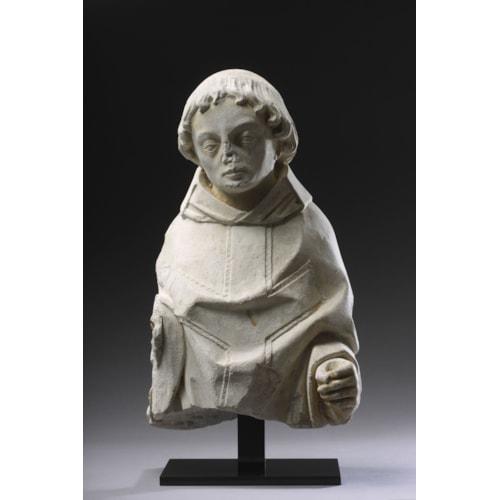


Interesting Set of Twelve Ivory Historical Caricature Portrait Reliefs Depicting some of the Leading Catholic Clergy Responsible for the Revocation of the Edict of Nantes in 1685
Interesting Set of Twelve Ivory Historical Caricature Portrait Reliefs Depicting some of the Leading Catholic Clergy Responsible for the Revocation of the Edict of Nantes in 1685
Period 1600-1800
Origin Anglo French
Medium Wood, Ivory, Velvet
Period: 1600-1800
Origin: Anglo French
Medium: Wood, Ivory, Velvet
Literature: The Edict of Nantes was issued in 1598 by Henry IV of France, and it granted the Protestant Calvinists substantial rights within the predominantly Catholic state with the aim of promoting civil unity. It marked the end of the French wars of religion and offered general freedom of conscience to individuals together with the reinstatement of the Huguenots civil rights, including the right to work in any field or profession.
Louis XIV encouraged by his Queen, Madame de Maintenon revoked the Edict of Nantes by means of the Edict of Fontainebleau on the 22nd October 1685. It was said that ‘bending all else to his will Louis XIV resented the presence of heretics among his subjects’. Religious toleration in France had always been a royal, rather than a popular policy and after 1685 the Huguenot population were no longer protected. Freedom of religious belief was no longer enshrined in law and they were forced and coerced to convert to Catholicism, and if they refused, persecuted.
Many fled to other countries taking with them knowledge of important techniques and styles which had on effect on the quality of the silk, silversmithing, watchmaking, jewellery, furniture and plate glass industries. Skilled artisans from the ivory workshops of Dieppe went to London, especially after the bombardment by the Anglo-Dutch fleet in 1694. The famous silversmiths Paul de Lamerie and Paul Revere were among the estimated two hundred thousand to one million displaced Protestant Huguenots refugees that fled France. Many came to London, but other European rulers such as Frederick Wilhelm Duke of Prussia actively encouraged them to seek refuge in their nations giving them incentives to set up as artists and craftsmen in Europe’s cities.

Finch & Co
Antiquities, ethnographica, natural history, sculpture and works of art
More artworks from the Gallery