
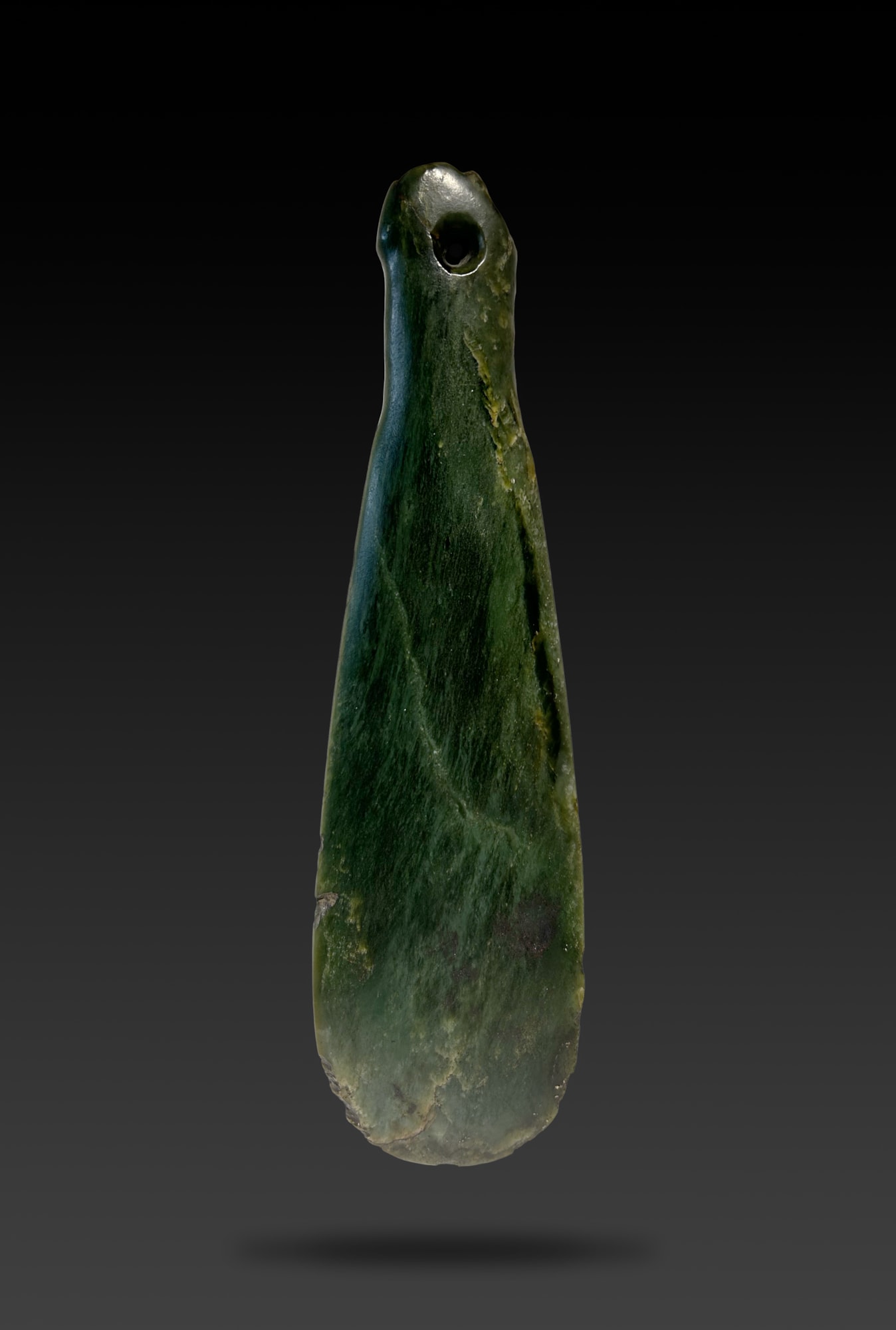
Archaic Maori Patu Pounamu
Archaic Maori Patu Pounamu
Provenance: Provenance:
Private collection, Great Britain.
Collection David Petty, Great Britain.
Patrick Mestdagh, Bruxelles, acquired from David Petty in 2008,
Collection Guy Porré & Nathalie Chaboche, Bruxelles, acquired from Mestdagh in 2013.
Literature: The pounamu or nephrite used to make a patu was carefully chosen to be flawless and to have a good color. A block of greenstone (also called jade) was first rough-cut and blocked out using pieces of quartzite combined with sand and water. Dressing and finishing of the surface was done by the specialist maker with fine sandstone and pieces of very hard, smooth stone. Due to the toughness of greenstone, patu pounamu were able to be made thinner than other similar patu made from basalt or whale bone, however this made the process of manufacture slower and arduous. The creation and finishing of a mere pounamu is claimed to have sometimes taken more than a full generation to complete.
Pounamu was and is still highly prized by Māori and the patu pounamu as the weapon of a chief or rangatira, was the most revered of all Māori weapons. These patu were passed down through generations; they were given individual names and were said to possess a spiritual quality or mana of their own. Particularly special patu were imbued with magical powers, or supernatural qualities. Due to the high value placed on revered patu pounamu they would often be hidden when not in use and kept in specially constructed cases. Considerable efforts were undertaken, often by an entire tribe, to recover or regain significant patu that were lost or stolen. Patu were buried with their chiefly owners but were considered so valuable that they were later recovered from the grave during the second burial. It was considered an honor to be killed by an especially significant or specific patu pounamu. Captives would sometimes volunteer their own patu pounamu as their means of execution rather than be killed by a lesser weapon.
See here the photo from the Canterbury Museum in Christchurch New Zealand showing archaic Patu with marked shoulders and squared and pierced reke (the ribbed pommel).

Galerie Meyer-Oceanic Art
Tribal Art dealer specializing in early Oceanic Art since 1980 and archaic Eskimo Art since 2010
Plus d'œuvres d'art de la Galerie