


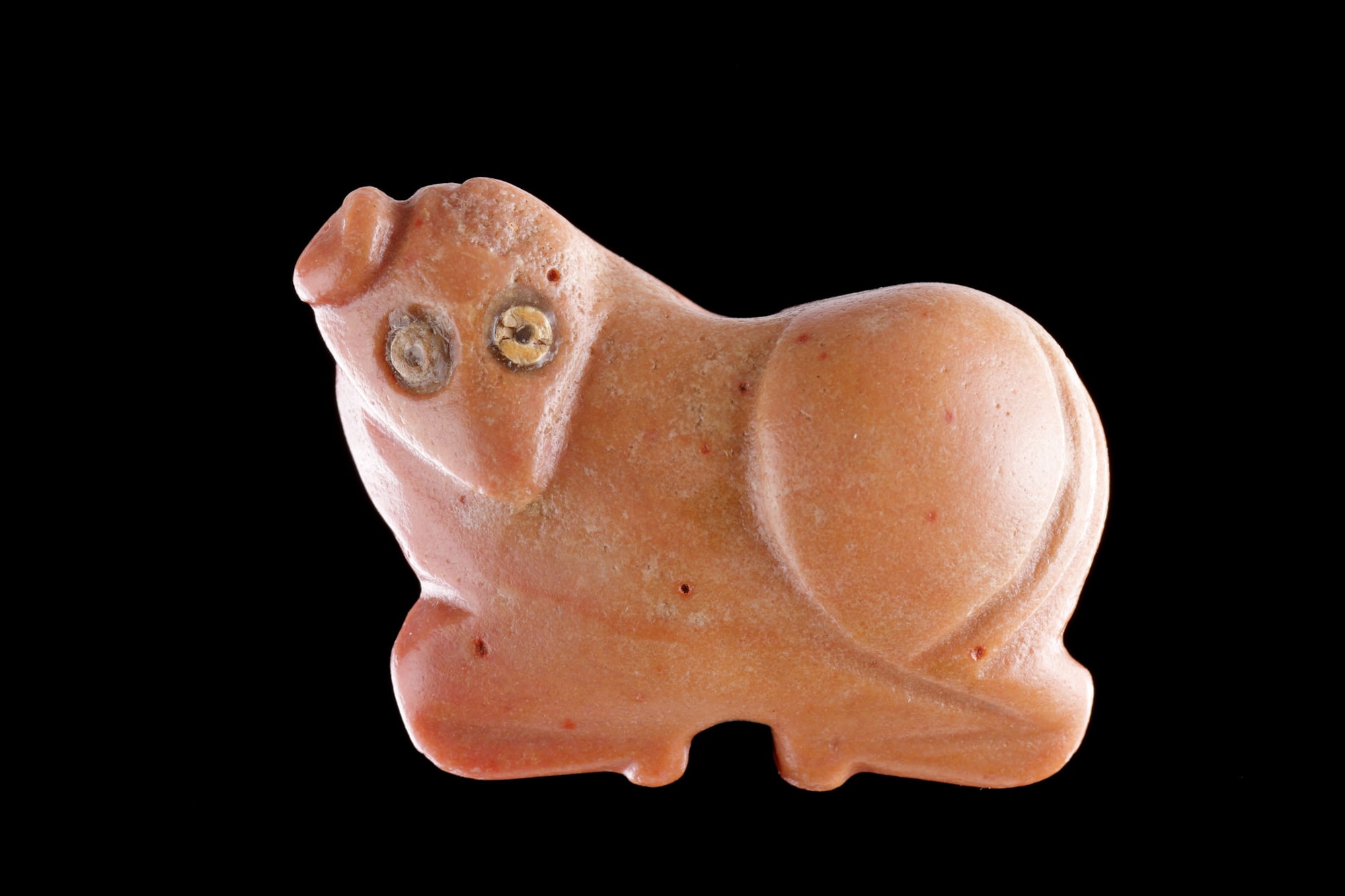
Ancient Near Eastern Sumerian Rose-Coloured Calcite Votive Pendant in the Form of a Recumbent Bull
Ancient Near Eastern Sumerian Rose-Coloured Calcite Votive Pendant in the Form of a Recumbent Bull
Period 3000 BC-2000BC
Origin Near East
Medium Calcite
Dimension 4 x 50 x 2.5 cm (1⁵/₈ x 19³/₄ x 1 inches)
A vertical hole for suspension drilled through the body
One ear worn away
Smooth silky patina
Circa 3000 BC
Size: 4cm high, 5cm wide, 2.5cm deep - 1½ in high, 2 ins wide, 1 ins deep
cf: See George Ortiz Collection no. 4, for a similar example
See: for another similar reclining bull sold by Finch and Co see catalogue number number, 16, spring 2010, entry number 124
Period: 3000 BC-2000BC
Origin: Near East
Medium: Calcite
Dimension: 4 x 50 x 2.5 cm (1⁵/₈ x 19³/₄ x 1 inches)
Provenance: Ex Private French collection formed 1950 - 1970
Ex Private London collection
cf: See George Ortiz Collection no. 4, for a similar example
See: for another similar reclining bull sold by Finch and Co see catalogue number number, 16, spring 2010, entry number 124
Literature: The bull was a powerful amuletic symbol in the arts of the ancient Near East. Sculpted out of a beautiful pinkish limestone and then highly polished, the naturalistic sculptural form is simple, yet the bull is boldly executed and particularly impressive of bovine power. The deeply inset staring eyes command the viewer’s attention and convey the essence of the bull. These votive pendants probably served as amulets as by the time this was made, working seals had taken the form of cylinders, although the shape and form harks back to an age when earlier models were used both as seals and amulets.

Finch & Co
Antiquities, ethnographica, natural history, sculpture and works of art
More artworks from the Gallery


_T639191055462481811.jpg?width=500&height=500&mode=pad&scale=both&qlt=90&format=jpg)